 1 / 6
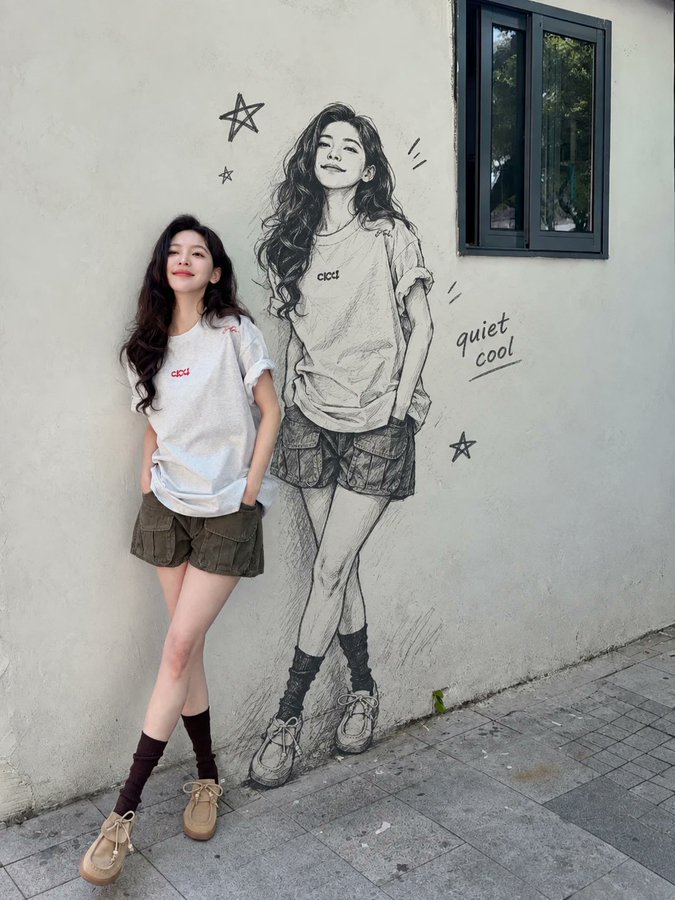
1 / 6墙绘分身:现实与手绘的对话
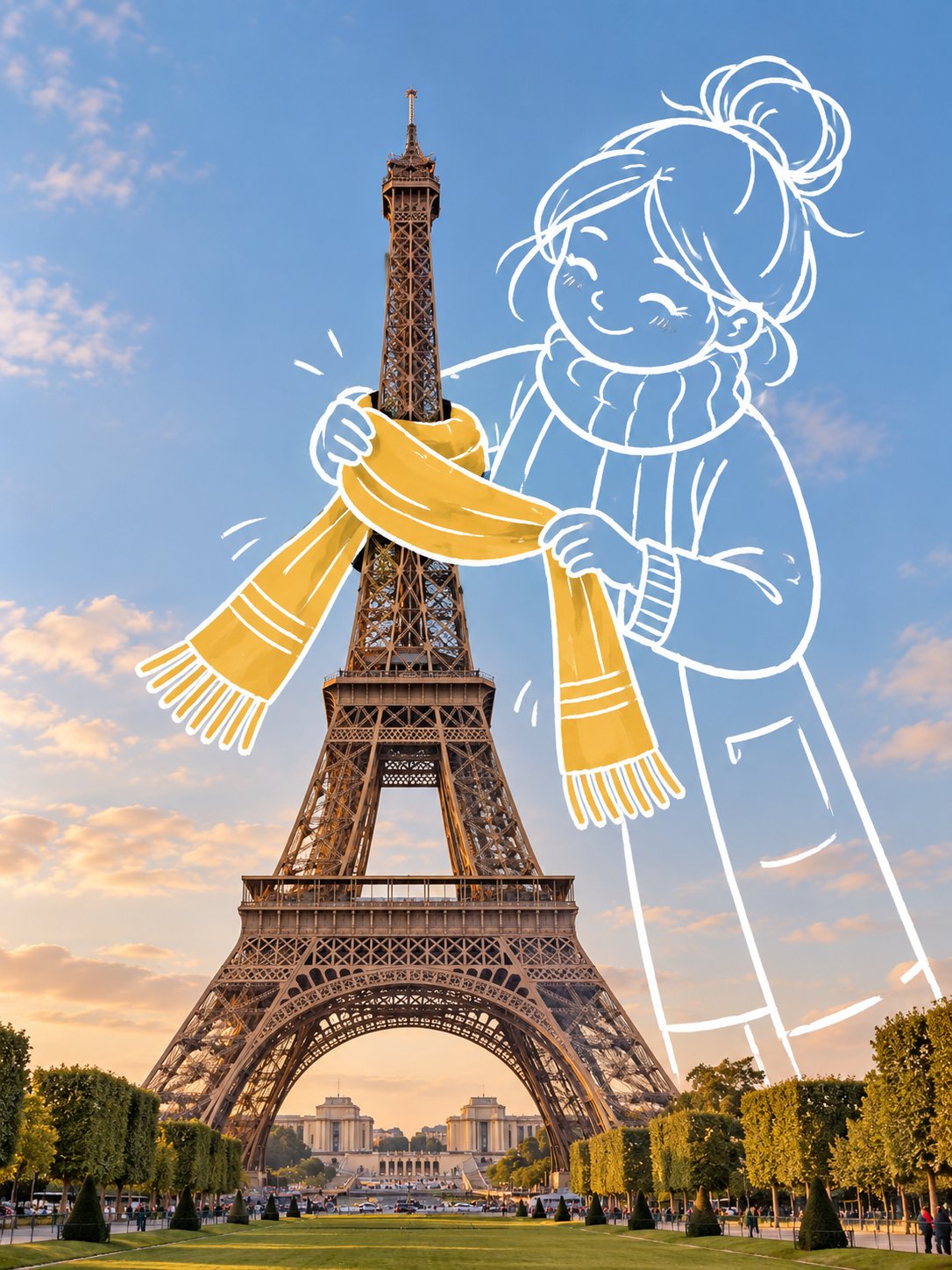
将照片中的真实人物与身后墙上的手绘黑白漫画风肖像并置,形成一实一绘的趣味对照,保留原始摄影质感与身份细节。
完整提示词
The uploaded photograph is the sole source of truth for the people, identities, clothing, accessories, poses, camera framing, and scene content. Create one seamless, photorealistic image in which every primary real subject appears together with a corresponding hand-drawn mural portrait painted directly onto a wall behind or beside them. PRIMARY-SUBJECT SELECTION Identify only the primary subjects: the people who are clearly the intended photographic subjects, compositional focus, and action focus of the uploaded image. Do not treat background pedestrians, distant figures, reflections, people in posters or screens, statues, or accidental bystanders as primary subjects. Preserve incidental background people when appropriate, but never create mural counterparts for them. ONE-TO-ONE SUBJECT COUNT If the source photograph contains N primary subjects, the final image must contain exactly: - the same N real primary subjects; and - exactly N mural counterparts. Every real subject must have one—and only one—clearly corresponding mural version. Never add, remove, merge, split, duplicate, replace, or swap any primary subject. For group photos, maintain the original left-to-right identity order and make every pairing visually unambiguous. LOCK THE REAL SUBJECTS Treat all real primary subjects as protected, identity-locked regions. Preserve them as closely as possible to the uploaded photograph. Strictly preserve each real subject’s: - facial identity and recognizable facial structure; - apparent age and natural skin appearance; - hairstyle, hair color, and hair accessories; - expression, gaze direction, and head angle; - exact clothing, garment colors, prints, patterns, layers, and visible details; - glasses, jewelry, hats, bags, footwear, and other accessories; - body proportions and visible anatomy; - arm directions, hand gestures, finger placement, leg positions, body orientation, and weight distribution; - relationship with all held, worn, touched, or supporting objects; - original photographic realism. Do not beautify, face-swap, age-shift, reshape, restyle, recolor, change clothing, change expression, alter the pose, or convert any real person into an illustration. Do not mirror or reverse the image. Do not invent body parts hidden or cropped outside the source frame. PRESERVE THE PHOTOGRAPH Keep the original camera angle, perspective, lens character, shot type, crop, aspect ratio, subject scale, depth of field, lighting direction, shadows, color atmosphere, and overall environment. Edit the background only where necessary to create a suitable mural surface. If the source already contains a usable wall, preserve that wall and integrate the drawing into it. If no suitable wall exists, minimally convert only an adjacent background surface into a believable light-colored or naturally textured wall. Do not expand the frame, zoom out, reconstruct off-frame content, or redesign the entire location. MURAL COUNTERPARTS Place one large two-dimensional mural portrait behind or beside each corresponding real subject. The mural should usually be approximately life-size to 1.6 times the real subject’s apparent size, depending on the available wall space. Each mural must strictly reproduce its corresponding subject’s: - recognizable identity; - face shape and visible facial characteristics; - hairstyle and accessories; - exact outfit design, silhouette, layers, patterns, and major details; - expression and gaze direction; - head angle; - arm directions and hand gestures; - leg positions; - body orientation, balance, and complete pose; - interaction with important props or objects. The mural may translate fine details into hand-drawn marks, but it must not reinterpret, exaggerate, simplify away, mirror, or change the meaning of the pose. Do not give the mural a different outfit, hairstyle, expression, gesture, prop, or body position. For multiple subjects, keep every mural spatially close to its own real counterpart. Never mix one person’s face with another person’s clothing, pose, accessories, or mural. MURAL DRAWING STYLE Render every mural as a handcrafted monochrome wall illustration combining: - expressive black ink linework; - graphite and pencil-sketch texture; - Japanese manga-inspired editorial drawing; - casual urban doodle aesthetics; - confident thick-to-thin contour lines; - loose construction strokes; - irregular handmade marks; - selective cross-hatching and scribbled shading; - a few solid-black accents; - simplified tonal modeling; - recognizable portrait likeness. Use the physical wall color as the drawing’s base, allowing the wall surface to remain visible through unfilled areas. The mural must remain clearly two-dimensional and visibly hand-drawn—not photorealistic, not fully colored, and not a second real person. Preserve important clothing patterns and accessories through simplified but recognizable linework. Give faces enough detail to identify the correct person while maintaining the loose manga-sketch character. PHYSICAL WALL INTEGRATION The mural must appear genuinely drawn or painted onto the architecture. Make all linework conform naturally to: - the wall’s plane and perspective; - surface grain and roughness; - cracks, seams, panels, bricks, or worn areas; - existing light and shadow; - architectural edges and partial occlusion. The wall texture should subtly interrupt or absorb the ink and pencil marks. The mural must not appear as a floating graphic, digital overlay, sticker, framed artwork, paper poster, banner, projection, or separate canvas. COMPOSITIONAL RELATIONSHIP Create a playful visual dialogue between each real person and their wall-drawn counterpart. Position the murals so the matching identity, outfit, and pose are immediately readable, while keeping the real subjects visually dominant and unobstructed. Do not cover faces, hands, key accessories, or important pose details. Preserve believable spatial depth and natural occlusion. The final composition should feel like a real photograph captured at an actual location—not a studio composite. DOODLES AND HANDWRITTEN TEXT Add only a few small black hand-drawn accents around the mural, such as hearts, crowns, stars, sparkles, question marks, exclamation marks, smiles, arrows, or short emphasis lines. Keep all decorations sparse, casual, and secondary to the people. Optionally add one short, context-appropriate English handwritten phrase containing 2–5 simple words. It may refer to the subject’s mood, pose, clothing, activity, or location. The phrase must be correctly spelled, clearly readable, and visually integrated into the same wall-drawing style. If reliable spelling cannot be produced, omit the phrase instead of generating broken or meaningless text. Do not add signatures, artist names, social-media handles, logos, labels, long sentences, random letters, or watermarks. FINAL APPEARANCE The finished result must look like a single authentic lifestyle photograph of real people posing beside custom wall murals of themselves. The people must remain unmistakably real and faithful to the uploaded photograph. Their mural counterparts must be unmistakably flat, monochrome, hand-drawn wall art with strict one-to-one identity, outfit, expression, and pose correspondence. From a distance, the real subjects and their mural counterparts should form a clear paired composition. At close range, the wall texture, irregular ink strokes, pencil marks, and cross-hatching should remain visible and physically convincing. PRIORITY ORDER When any instruction competes for space or clarity, follow this priority: 1. Preserve the exact primary-subject count and one-to-one correspondence. 2. Preserve the real subjects’ identities and photographic appearance. 3. Preserve the exact clothing, accessories, expression, pose, and object interactions. 4. Preserve the original crop, camera viewpoint, lighting, and environment. 5. Integrate each mural naturally into a real wall. 6. Add optional decorative doodles and text only when space permits. HARD FAILURES TO AVOID No changed identity. No changed face. No beauty filter. No changed age. No changed hairstyle. No changed clothing or clothing color. No changed expression. No changed gaze. No changed pose or gesture. No mirrored pose. No added, missing, duplicated, merged, or swapped primary subject. No missing or unmatched mural. No identity mixing between subjects. No new person. No mural for a background bystander. No illustrated real subject. No photorealistic mural subject. No full-image illustration. No detached or floating drawing. No sticker, frame, poster, paper, projection, or separate canvas. No collage, diptych, split screen, comparison layout, or poster design. No expanded framing or invented off-frame anatomy. No excessive doodles. No cluttered replacement background. No malformed face, hands, fingers, limbs, or object interactions. No garbled text. No logo, signature, social-media handle, or watermark. Return exactly one complete final image with no explanatory text and no alternate versions.
使用说明
上传一张或多人的清晰照片。提示词会严格保留原片中每位主体的面部特征、发型、服装、配饰、姿态及环境光影,并在其身后或身旁的墙面上生成对应的黑白手绘壁画。壁画风格融合墨水线条、铅笔素描肌理与日系漫画速写感,与真实人物形成一对一配对。可替换主体、场景与墙面类型,但需确保原图有可用的墙面空间;若无合适墙面,生成时会自动将部分背景转换为浅色或自然纹理的墙壁。装饰涂鸦和简短英文手写短语为可选元素,仅在空间允许时添加。生成结果需根据实际墙面透视、纹理和光线效果进行微调。